
What to Drink to Increase Breast Milk Naturally at Home
Many moms go through phases where feeding suddenly feels difficult, especially during teething, growth spurts, or appetite changes. It's normal to worry about supply and whether your baby is getting enough. While you may search for what to drink to increase breast milk, it's important to know that drinks only support hydration and nutrition. Milk supply mainly depends on frequent feeding, proper latch, and your baby's current phase.
If you're looking for more ways beyond drinks, you can also read "How to Increase Breast Milk Supply Naturally" to understand what truly helps improve supply.
Can Drinks Really Increase Breast Milk Supply?
Drinks can support breast milk production, but they don't directly increase it on their own. Breast milk works on a simple supply and demand system. The more your baby feeds (or you pump), the more your body gets the signal to produce milk. This is controlled by hormones like prolactin and oxytocin.
So where do drinks help?
Staying well-hydrated is important because your body needs fluids to produce milk. If you're dehydrated, your supply can feel lower or slower. That's why many moms notice an improvement when they start drinking more water or warm fluids regularly. Traditional drinks like jeera water, fennel water, fenugreek water, or coconut water can support digestion, hydration, and overall recovery, especially in the postpartum phase. This can indirectly help your body function better for milk production.
What to Drink to Increase Breast Milk
If you're wondering what to drink to increase breast milk, the focus should be on hydration, nourishment, and traditional postpartum support. These drinks don’t act as instant boosters, but they help your body function better, which supports milk production over time.
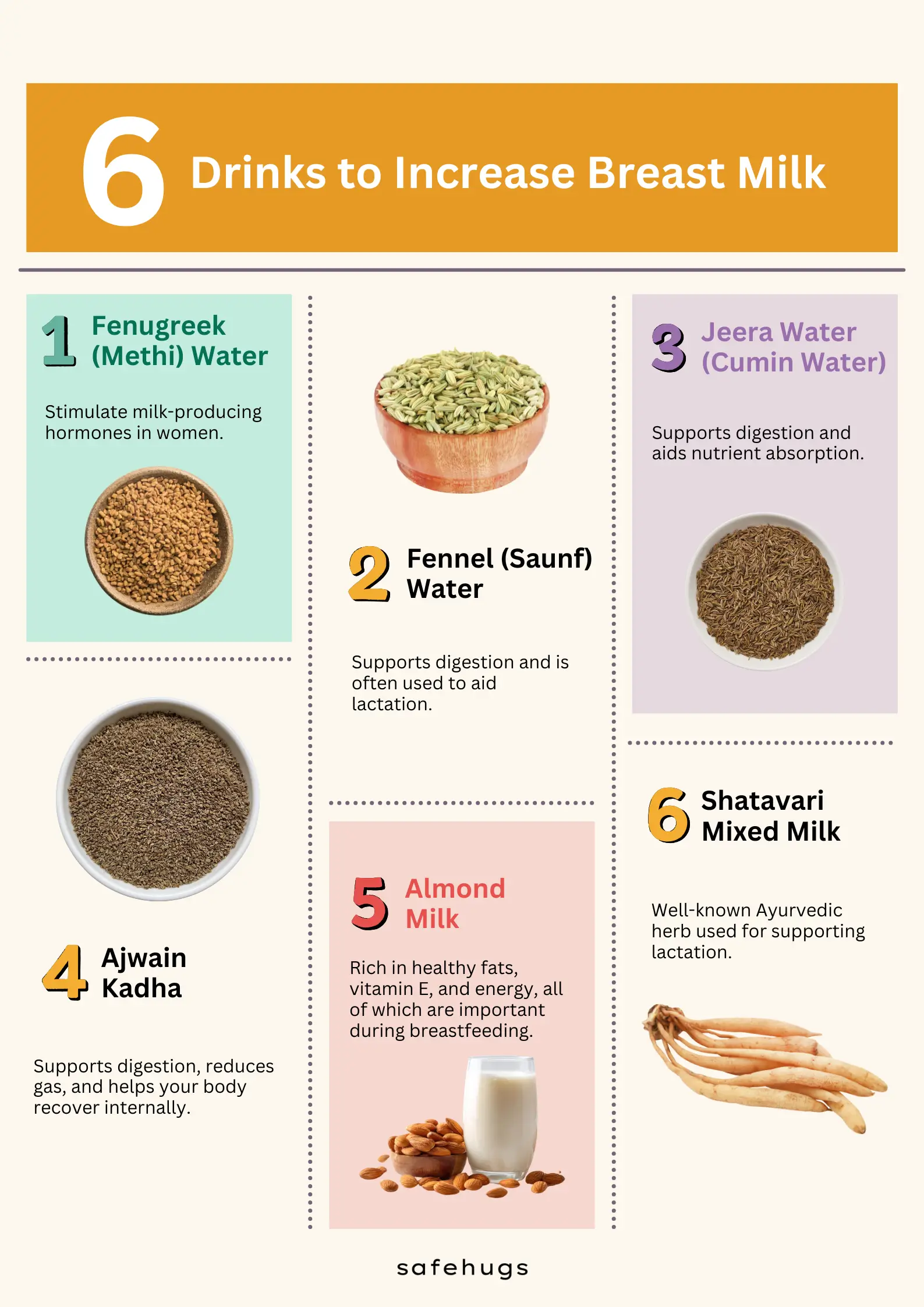
Traditional Indian Lactation Drinks
Fenugreek (Methi) Water
Fenugreek is one of the most widely used natural ingredients for supporting lactation. It contains compounds that may help stimulate milk-producing hormones in some women. You can soak a teaspoon of fenugreek seeds overnight and drink the water in the morning, or boil it lightly. Some moms notice an increase in supply within a few days, while others may not see much change, it varies from person to person. It's best to start with small quantities, as too much fenugreek can cause bloating or a slight drop in blood sugar.
Jeera Water (Cumin Water)
Jeera water is simple but very effective for postpartum recovery. It helps improve digestion and nutrient absorption, which is important because your body needs proper nutrition to produce milk. Boil a teaspoon of cumin seeds in water and drink it warm once or twice a day. Many moms prefer having it in the morning or after meals. It's gentle, safe for regular use, and also helps reduce gas and discomfort.
Fennel (Saunf) Water
Fennel is traditionally believed to support milk flow and reduce colic in both mom and baby. It has mild estrogen-like properties that may help with lactation. You can boil fennel seeds in water or simply sip fennel-infused water throughout the day. It’s especially helpful if you experience bloating or digestive discomfort.
Ajwain Kadha
Ajwain kadha (made with ajwain, jeera, and saunf) is commonly given after delivery. It mainly supports digestion, reduces gas, and helps your body recover internally. While it doesn’t directly increase milk supply, a healthy and comfortable body supports better feeding and milk production. It's best consumed warm, once a day, especially after meals.
Herbal Lactation Tea
Lactation teas are a convenient option for busy moms. They usually contain a mix of herbs like fenugreek, fennel, and blessed thistle. They are easy to prepare and can be included as part of your daily routine. However, results vary, and they should be seen as a supportive addition, not a primary solution.
Almond Milk
Almond milk is rich in healthy fats, vitamin E, and energy, all of which are important during breastfeeding. It doesn't directly increase milk supply but helps keep your body nourished. You can have it warm, especially in the morning or at night. It's a good option if you’re looking for something light yet nutritious.
Turmeric Milk
Turmeric milk is more about healing than increasing supply. After delivery, your body goes through a lot of internal recovery, and turmeric helps reduce inflammation and supports overall health. A well-recovered body is better able to maintain milk production. Having a glass of warm turmeric milk at night can also be soothing.
Shatavari Mixed Milk
Shatavari is a well-known Ayurvedic herb used for supporting lactation. It is often consumed as a powder mixed in warm milk. Many moms report improvement in supply, but it's important to consult a doctor before starting, especially if you have any medical conditions. It works best when combined with good hydration and regular feeding.
Shatavari helped me, but hydration and rest made a bigger difference. - from our Mom Insider community
Coconut Water
Coconut water is excellent for hydration and replenishing electrolytes, especially if you feel tired or dehydrated. Since breast milk production requires fluids, staying hydrated can make a noticeable difference. Coconut water is a refreshing option you can include once a day.
Water
No drink is more important than plain water. Even slight dehydration can make you feel low on energy and may affect your milk flow. A simple habit of drinking a glass of water before or after every feed, can help you stay consistently hydrated throughout the day.
Yellow Moong Dal Soup
Moong dal soup is light, easy to digest, and rich in protein. It's commonly recommended during postpartum recovery because it nourishes without putting stress on digestion. Warm soups also increase your fluid intake, which supports milk production indirectly.
Along with this increase water intake, yellow moong dal soup… this really helped my supply. - from our Mom Insider community
Masoor Dal Soup
Masoor dal is rich in iron and helps replenish nutrients, especially if you feel weak after delivery. Like moong dal, it works as both food and fluid, making it a practical addition to your daily diet. Regular nourishment plays a key role in maintaining milk supply.
My mom used to give me masoor dal regularly to increase milk supply. - from our Mom Insider community
Fruits to Increase Breast Milk Supply
Fruits don't directly increase breast milk supply, but they play an important role in hydration, energy, and overall nutrition. Including a variety of fresh, seasonal fruits in your diet can help your body function better during breastfeeding. Here are some fruits commonly recommended:
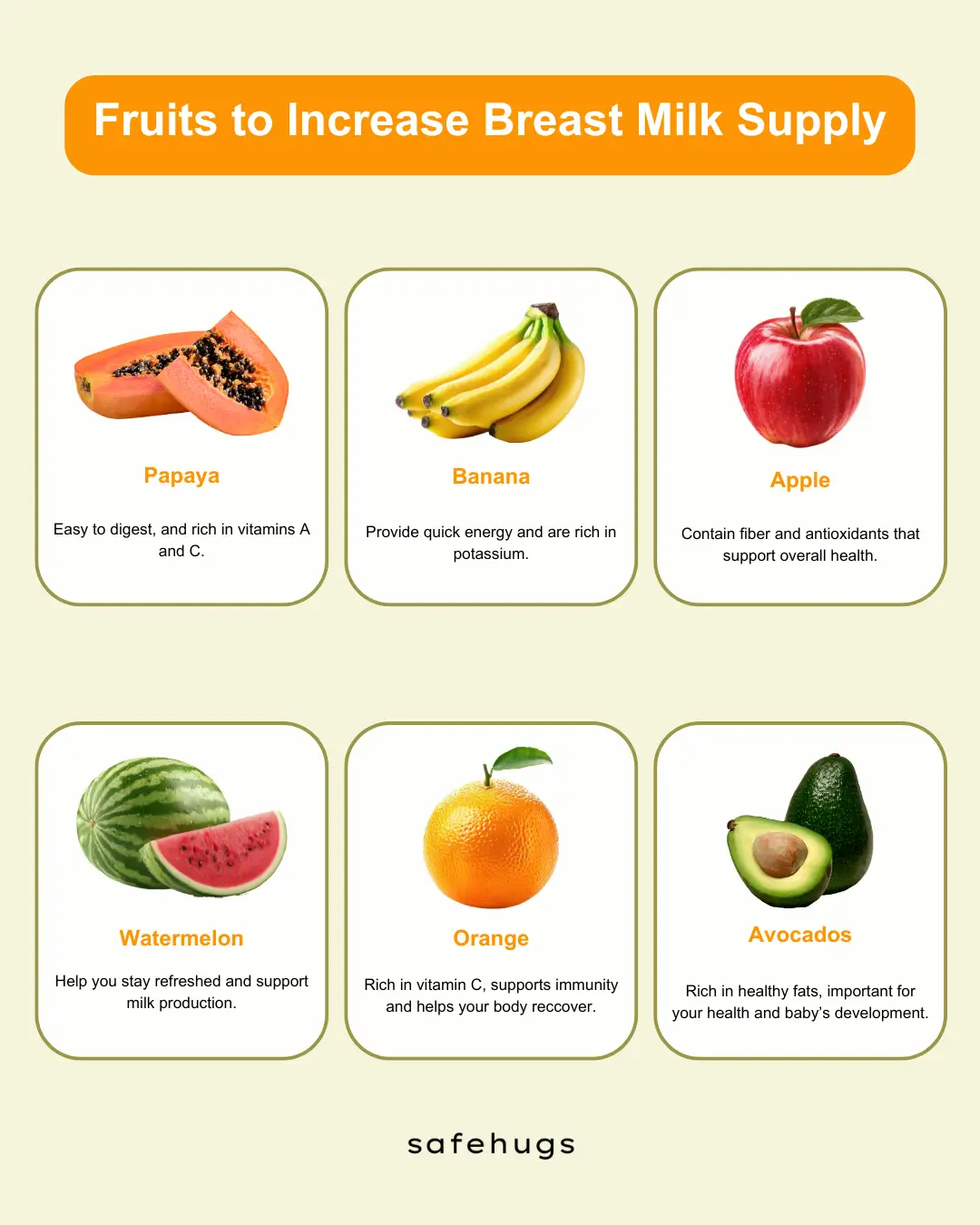
Papaya
Papaya is commonly included in postpartum diets because it is light, easy to digest, and rich in vitamins A and C. In many traditional practices, ripe papaya (and even cooked raw papaya) is believed to support lactation. It’s especially helpful if you’re dealing with digestion issues after delivery.
Banana
Bananas are one of the easiest foods to include during busy days with a baby. They provide quick energy and are rich in potassium, which helps maintain fluid balance in the body. Since breastfeeding can be physically draining, bananas help prevent fatigue and support overall strength.
Apple
Apples are gentle on the stomach and can be eaten at any time of the day. They contain fiber and antioxidants that support overall health. While they don't directly increase milk supply, they contribute to a well-balanced diet, which is essential for breastfeeding moms.
Watermelon
Watermelon is excellent for hydration because of its high water content. Many moms don’t realize that even mild dehydration can affect how their body feels and functions. Including hydrating fruits like watermelon can help you stay refreshed and support milk production indirectly.
Orange and Citrus Fruits
Citrus fruits like oranges and sweet lime are rich in vitamin C, which supports immunity and helps your body recover after delivery. They also add variety to your diet and can be a refreshing option, especially if you feel low on energy.
Sapota (Chikoo)
Chikoo is naturally sweet and energy-rich, making it helpful when you need extra calories during breastfeeding. Since your body uses more energy to produce milk, including such fruits can help maintain stamina throughout the day.
Avocado
Avocado is rich in healthy fats, which are important for both your health and your baby’s development. While not directly linked to increasing supply, it supports overall nutrition, which plays a key role in sustained milk production.
Drinks to Avoid or Limit While Breastfeeding
Just as some drinks support your body, others can affect hydration, interfere with your baby's comfort, or add unnecessary stress to your system if consumed in excess. You don't have to completely avoid everything, but being mindful helps.
Excess Caffeine
Caffeine (from coffee, tea, cola, or energy drinks) passes into breast milk in small amounts. Babies process caffeine much slower than adults, so even small amounts can sometimes make them fussy, restless, or disturb their sleep. For most moms, limiting caffeine to 1-2 cups a day is considered safe. If you notice your baby becoming unusually irritable, it may help to reduce intake and observe changes.
Sugary Drinks
Packaged juices, sodas, and sweetened drinks may feel refreshing, but they don't provide real nourishment. They can lead to quick energy spikes followed by crashes, making you feel more tired. Over time, excess sugar can also affect overall health and recovery.
Alcohol
Alcohol enters breast milk and can affect your baby's sleep patterns, feeding, and development. Occasional consumption may be manageable if timed carefully, but frequent intake is not recommended during breastfeeding. If you do choose to drink, it's important to wait before the next feed and plan accordingly. When in doubt, it’s best to consult your doctor.
Artificial Beverages
Drinks with artificial flavors, colors, or sweeteners (like soft drinks, flavored powders, or diet beverages) offer little to no nutritional benefit. Some ingredients may also not be ideal for regular consumption during breastfeeding.
Practical Tips to Increase Milk Supply Naturally
If you're worried about supply, it's important to focus on what actually makes a difference. Along with understanding what to drink to increase breast milk, these everyday practices play a much bigger role in maintaining and improving milk production:
1. Feed Frequently (Supply = Demand)
Breast milk production works on demand. The more your baby feeds, the more your body produces. Try not to stretch feeds too long, especially in the early months.
2. Ensure Proper Latch
A good latch helps your baby get enough milk and also signals your body to produce more. If the latch is shallow, milk transfer may be less, which can affect supply over time.
3. Don't Rely Only on Pump Output
Many moms feel they have low supply because they pump less milk. But pumping output is not an accurate measure, babies are usually much more efficient than pumps.
4. Try Power Pumping (If Needed)
Power pumping mimics cluster feeding and can help boost supply. It usually involves pumping in intervals (for example, 20 minutes on, 10 minutes off) for about an hour once a day for a few days.
5. Stay Hydrated and Eat Well
Regular fluids, balanced meals, and enough calories are essential. This is where drinks and nourishing foods support your body.
6. Rest and Reduce Stress
Lack of sleep and stress can affect milk flow. Even small rest breaks and asking for help can make a difference.
7. Skin-to-Skin Contact
Holding your baby close helps release hormones that support milk production and let-down.
For a detailed guide on improving supply through daily habits, read "Breastfeeding: How to Increase Breast Milk Supply Naturally".
Common Breastfeeding Concerns
Can You Reheat Breast Milk More Than Once?
It's best not to reheat breast milk more than once. Each time milk is warmed and cooled again, the risk of bacterial growth increases, and some nutrients may start to break down. A safer approach is to warm only the amount your baby will drink in one feed. If there is any leftover, it should ideally be used within 1-2 hours and not reheated again. This helps maintain the safety and quality of the milk.
How Much Expressed Milk Should You Give?
The amount of expressed breast milk a baby needs can vary based on age, appetite, and feeding pattern. As a general guide, babies between 0-2 months may take around 60-90 ml per feed, 2-4 months around 90-120 ml, and 4-6 months around 120-150 ml. After 6 months, when solids are introduced, milk intake may naturally vary. However, these numbers are only guidelines, every baby is different. Some may prefer smaller, more frequent feeds, while others take more at once. Instead of focusing only on quantity, it's more helpful to watch your baby's cues. If your baby is active, gaining weight well, and having enough wet diapers, they are likely getting enough milk.
What NOT to Do
Don't force feed your baby, especially during teething or low appetite phases
Don't rely only on drinks or supplements as a quick fix for milk supply
Don't judge your milk supply based on pump output alone
Don't compare your breastfeeding journey with other moms
Don't ignore proper latch and feeding technique
Don't skip meals or stay dehydrated
Don't overlook rest, lack of sleep and stress can affect milk flow
When to Seek Help
If your baby is not gaining weight as expected
If there are very few wet diapers in a day
If your baby seems constantly lethargic or weak
If your baby is always fussy or unsatisfied after feeds
If you experience pain, discomfort, or difficulty while breastfeeding
If there is a sudden drop in milk supply that doesn't improve
If you're feeling confused, stressed, or unsure about feeding
Conclusion
If you're wondering what to drink to increase breast milk, it’s important to remember that there is no single drink that works instantly. Staying well-hydrated and including traditional, nourishing drinks can support your body, but milk production mainly depends on how often your baby feeds, proper latch, and overall care.
Frequently Asked Questions
What to drink to increase breast milk fast?
There is no drink that increases breast milk instantly, but staying hydrated can help support milk production. Water, coconut water, and warm drinks like jeera water or fennel water are commonly used. Along with this, frequent feeding or pumping is what helps increase supply more effectively.
How much water should I drink while breastfeeding?
There is no fixed amount for everyone, but most breastfeeding mothers need around 2.5 to 3 liters of fluids daily. A simple way to stay on track is to drink a glass of water before or after each feed and listen to your body's thirst signals.
Which Indian drinks increase breast milk naturally?
Traditional Indian drinks like fenugreek (methi) water, jeera water, fennel water, and ajwain kadha are commonly used during the postpartum period. They help with hydration and digestion, which indirectly supports milk production.
Can I give pumped milk instead of breastfeeding?
Yes, you can give expressed (pumped) breast milk if direct breastfeeding is not possible. However, direct feeding helps maintain supply and bonding. If using a bottle regularly, it's important to ensure proper feeding techniques to avoid nipple confusion.
What to drink to increase breast milk after a C-section?
After a C-section, focus on warm, easy-to-digest drinks like jeera water, ajwain water, fennel water, turmeric milk, and coconut water. These support recovery and hydration, which helps your body maintain milk supply.
What to drink to increase breast milk during pregnancy?
Breast milk production begins after delivery, so there are no specific drinks needed to increase supply during pregnancy. Instead, focus on staying hydrated and eating a balanced diet to prepare your body for breastfeeding.