
Why Is My Newborn Gagging While Sleeping? Causes & Fixes
If you're wondering why is my newborn gagging while sleeping, the answer is usually simple and not as alarming as it feels. In most cases, gagging during sleep happens because a newborn's body is still developing. Their gag reflex is very sensitive, and even small amounts of milk, saliva, or mucus can trigger it. This is actually the body's natural way of protecting your baby from choking. Occasional gagging is generally normal. However, if it happens very frequently, is accompanied by breathing difficulty, or your baby seems uncomfortable, it's important to pay closer attention and seek medical advice if needed.
Is It Normal for Newborns to Gag While Sleeping?
Yes, in most cases, it is completely normal for newborns to gag while sleeping. Newborns are still learning how to coordinate swallowing, breathing, and digestion. Their gag reflex is also much more sensitive than in older babies or adults. This means even a small amount of milk, saliva, or mucus can trigger gagging, especially when they are lying down.
In fact, this reflex is protective. It helps prevent choking by pushing anything away from the airway. So occasional gagging, without other symptoms, is usually not a cause for concern. However, it's important to observe the pattern. If your newborn is gagging very frequently, seems distressed, has trouble breathing, or shows signs like poor feeding or vomiting often, it's best to consult a pediatrician.
Common Reasons Why Newborn is Gagging While Sleeping

Immature Gag Reflex
Newborns are born with a very sensitive gag reflex. This reflex is stronger than in older babies because it acts as a protective mechanism to prevent choking. Even a small amount of liquid or slight throat stimulation can trigger gagging. Sometimes, babies may gag even when there is nothing visible, this is completely normal in early development.
Newborn Gagging After Feeding
Gagging is more common after feeds. When a baby lies down soon after feeding, milk can come back up slightly, triggering the gag reflex. This is especially common if the baby falls asleep while feeding.
Feeding methods can also play a role, understanding the possible side effects of bottle feeding can help you identify triggers behind gagging episodes.
Reflux
Reflux is very common in newborns because the valve between the stomach and food pipe is still weak. Milk can easily come back up, causing gagging. Some babies may not spit up visibly but still experience discomfort, this is known as silent reflux. Gagging without vomiting is often linked to this.
Excess Saliva or Mucus
Newborns produce a lot of saliva, and during colds, mucus can build up in the throat. Since babies are still learning how to swallow effectively, this extra fluid can trigger gagging. It may happen more during sleep because swallowing reflexes slow down.
Gagging can sometimes be due to post-nasal drip during a cold. Using a humidifier and keeping the baby comfortable can help. - from our Mom Insider community
Sleeping Position & Lying Flat
When babies lie flat on their back, gravity makes it easier for milk, saliva, or mucus to move toward the throat. This can trigger gagging, especially after feeds. While back sleeping is the safest position, this is one reason gagging is commonly noticed during sleep.
Gas or Digestive Discomfort
Gas buildup can make babies uncomfortable and restless. Sometimes, gagging happens along with squirming, arching, or fussiness. While gas itself doesn't directly cause gagging, the discomfort can trigger movements that lead to it.
Overfeeding
A newborn's stomach is very small, and feeding beyond their capacity can lead to regurgitation. When excess milk comes back up, it can trigger gagging. Overfeeding can happen unintentionally, especially during frequent feeding or when trying to soothe the baby with milk.
Growth Spurts & Feeding Changes
During growth spurts, babies feed more often and sometimes in larger amounts. This sudden change can temporarily overwhelm their digestive system, leading to more spit-up and gagging episodes. This phase usually settles as the baby adjusts.
2 Week Old Baby Gagging in Sleep
At 2 weeks, gagging during sleep is usually normal. At this stage, your baby's gag reflex is very sensitive, and their swallowing coordination is still developing. Even small amounts of milk, saliva, or mucus can trigger gagging. It may also happen more if your baby feeds and falls asleep immediately after. As long as your baby is breathing comfortably and feeding well, occasional gagging is typically not a concern.
1 Month Old Baby Gagging in Sleep
By 1 month, gagging can still be common, especially due to feeding-related reasons. Reflux (including silent reflux), lying flat after feeds, or not burping properly can all contribute. Some babies may gag without spitting up, which can worry parents, but is often linked to mild reflux or saliva buildup. Keeping your baby upright for a short time after feeds can help reduce episodes.
2-4 Month Baby Gagging Frequently
Between 2 to 4 months, some babies may gag more frequently due to increased saliva production and better hand-to-mouth coordination. Babies start exploring by putting their hands in their mouth, which can sometimes trigger gagging. Teething signs may also begin early for some babies, increasing saliva. If your baby is otherwise active, feeding well, and not showing signs of distress, this phase is usually temporary and improves with time.
What to Do If Your Newborn Gags While Sleeping
In most cases, occasional gagging can be managed with simple changes in feeding and care. The goal is to reduce triggers like milk flow, mucus buildup, or discomfort while keeping your baby safe and comfortable.
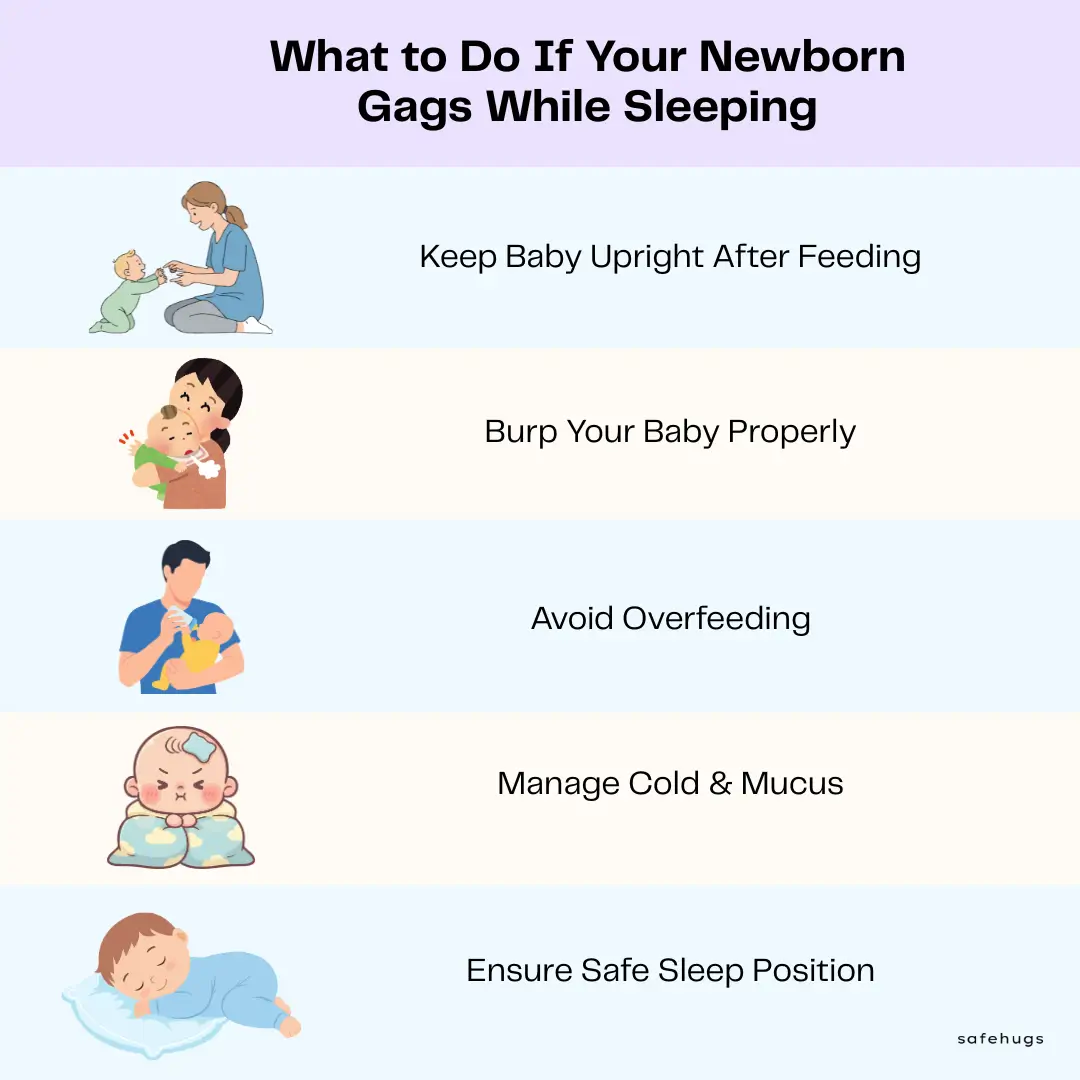
Keep Baby Upright After Feeding
Hold your baby upright for about 15-20 minutes after each feed. This helps the milk settle in the stomach and reduces the chances of it flowing back up and causing gagging.
Burp Your Baby Properly
Burping helps release trapped air that can cause discomfort and spit-up. Try burping your baby during and after feeds, especially if they tend to feed quickly or swallow air.
Avoid Overfeeding
A newborn's stomach is small, and feeding beyond their capacity can lead to milk coming back up. Watch for fullness cues like turning away, slowing down, or falling asleep, and avoid forcing feeds.
Check Feeding Method
Make sure your feeding technique is comfortable for your baby.
If breastfeeding, ensure a proper latch
If bottle feeding, use a slow-flow nipple
Try paced feeding to control milk flow
These small adjustments can reduce gagging, especially during or after feeds.
Manage Cold & Mucus
If your baby has a cold, mucus buildup can trigger gagging. Keeping the air slightly humid (using a humidifier) and ensuring your baby's nose is clear can help. Always keep your baby comfortable and monitor for breathing ease.
Ensure Safe Sleep Position
Always place your baby on their back to sleep on a firm, flat surface. Avoid pillows or elevation devices unless advised by a doctor. While gagging can happen in this position, it is still the safest way for babies to sleep.
Starting Solids & Gagging
Gagging often becomes more noticeable when babies start solids, usually around 6 months. This is completely normal and expected. A baby's gag reflex is naturally strong and positioned more forward in the mouth, which helps prevent choking as they learn to handle new textures.
In the beginning, babies are still learning how to move food in their mouth and swallow properly. Because of this, gagging can happen frequently, especially when introducing new foods or textures. While it may look uncomfortable, most babies recover quickly and continue eating, which is a sign that it is part of the learning process.
Starting with simple, soft foods like mashed fruits or vegetables and gradually moving to thicker textures can help. It is also important to introduce one food at a time and avoid mixing too many ingredients in the early stages. As your baby grows, they will naturally adapt to different textures and gag less over time.
Gagging at the start of solids is pretty common. Maybe try giving a different fruit or food. Also, make sure your baby is sitting upright, even with support, that’s completely fine at 6 months. - from our Mom Insider community
As your baby grows, choosing the right foods becomes important, explore the best brain foods for toddlers and growing kids to support healthy development.
Newborn Gagging vs Choking
It is important for parents to understand the difference between gagging and choking, as they are often confused. Gagging is a normal reflex and is usually accompanied by coughing, sputtering, or noise. The baby is able to manage it on their own, and it typically resolves within seconds. Choking, on the other hand, is more serious and often silent. A choking baby may struggle to breathe, show signs of distress, or have a change in skin colour. While gagging is the body's natural way of protecting the airway, choking requires immediate attention and intervention. Knowing this difference can help parents respond calmly and appropriately.
Can Gagging Lead to Choking?
Gagging itself does not usually lead to choking. In fact, it is a protective mechanism designed to prevent choking by pushing food or liquid away from the airway. However, certain situations can increase the risk, such as offering food that is not suitable for the baby's age, feeding while the baby is lying down, or leaving the baby unattended during meals. As long as feeding is done safely and appropriately, gagging is not something that typically progresses into choking.
Choking Prevention Tips Every Parent Should Know
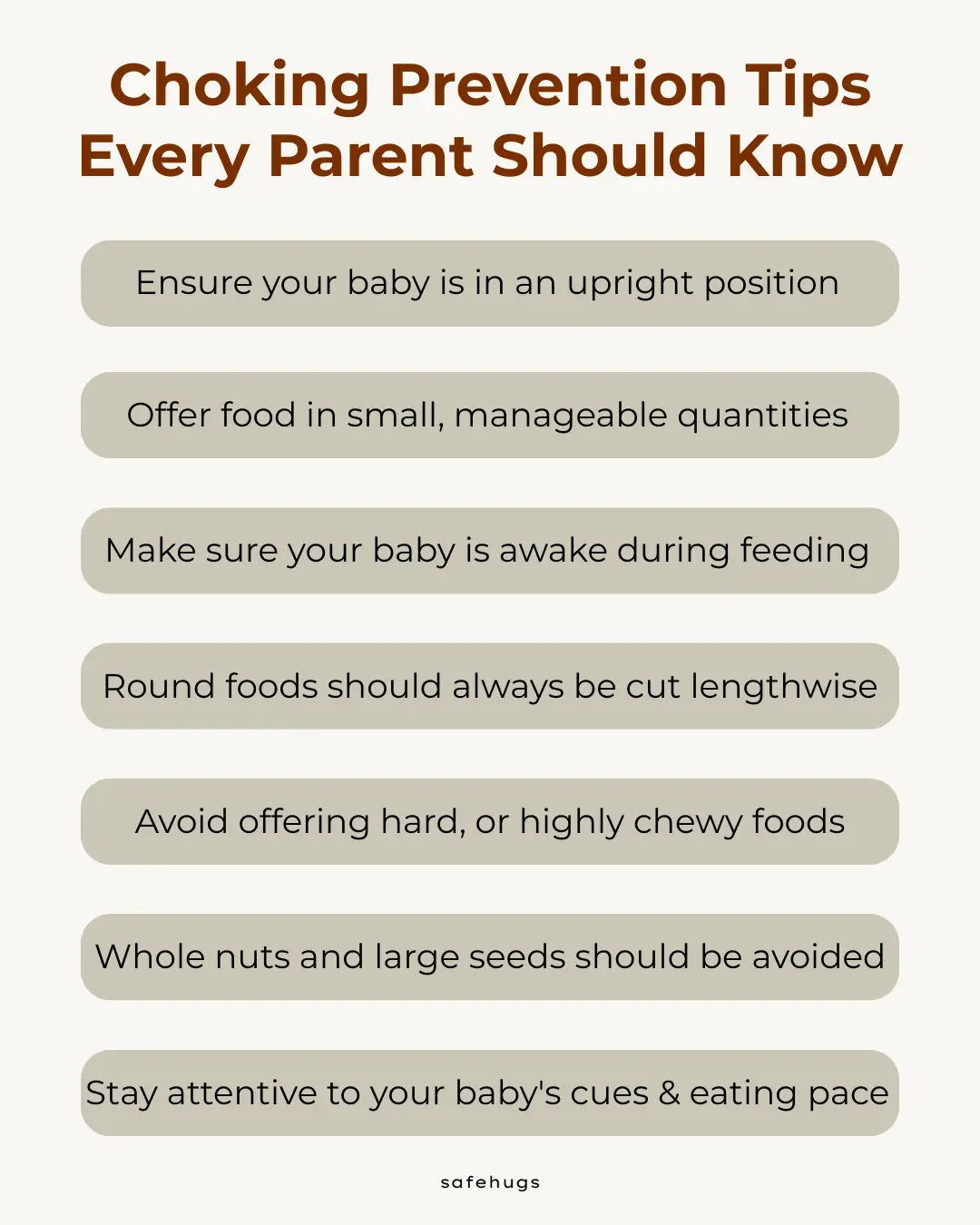
Always ensure your baby is in a proper upright position while eating, even if they require support to sit. Feeding in a reclined or lying position increases the risk of choking.
Supervision is non-negotiable. A baby should never be left alone during meals, even for a short moment.
Offer food in small, manageable quantities to prevent the baby from taking in more than they can safely handle at once.
Make sure your baby is fully awake, attentive, and not overly fussy or sleepy during feeding, as this affects their ability to swallow safely.
Pay close attention to the texture, size, and shape of food. Foods should be soft enough to mash easily and appropriately modified for the baby's age and ability.
Round foods such as grapes, cherry tomatoes, or similar items should always be cut lengthwise, as their shape can easily block the airway if swallowed whole.
Avoid offering hard, sticky, or highly chewy foods, as these are difficult for babies to manage and increase choking risk.
Whole nuts and large seeds should be avoided, as they are a significant choking hazard in early childhood.
Foods like nut butters should be spread thinly, rather than given in thick amounts that can stick in the throat.
Maintain a calm, distraction-free feeding environment so the baby can focus on chewing and swallowing properly.
As your baby grows, gradually introduce more textures, but always ensure the food remains safe and appropriate for their developmental stage.
Stay attentive to your baby's cues and eating pace, and intervene early if you notice any signs of difficulty.
If you are ever uncertain about the safety of a particular food, it is best to modify it further or avoid offering it until your baby is ready.
If you're not comfortable feeding a particular food, don't offer it until you're sure it's safe. - from our Mom Insider community
When Should You Worry About Newborn Gagging?
While occasional gagging is usually normal, certain signs should not be ignored. You should pay closer attention if gagging happens very frequently, seems forceful, or is increasing over time instead of improving. If your baby shows signs of difficulty breathing, pauses in breathing, or appears to struggle during or after gagging, it requires immediate attention.
Gagging accompanied by symptoms like persistent coughing, choking episodes, vomiting after most feeds, or refusal to feed may indicate an underlying issue such as reflux or a feeding difficulty. Changes in your baby's colour, especially turning pale or bluish around the lips, are serious warning signs and need urgent medical care.
It's also important to notice your baby's overall behaviour. If your baby seems unusually irritable, uncomfortable during feeds, not gaining weight well, or appears lethargic, gagging should not be dismissed as normal. Trust your instincts, if something feels off or different from your baby’s usual pattern, it is always better to consult a pediatrician.
Takeaways
Newborn gagging while sleeping is often a normal part of early development. If you’re wondering why is my newborn gagging while sleeping, it is usually linked to an immature gag reflex, feeding patterns, or mild reflux. In most cases, it does not indicate a serious problem and improves as your baby grows and develops better control over swallowing and digestion.
Simple practices like keeping your baby upright after feeding, burping properly, and following safe feeding techniques can significantly reduce gagging episodes. Understanding the difference between gagging and choking is equally important, as it helps you respond calmly and appropriately.
Frequently Asked Questions
Why does my newborn gag while sleeping?
Newborns may gag during sleep due to a sensitive gag reflex, which is normal in the early months. Small amounts of milk, saliva, or mucus can trigger this reflex, especially when the baby is lying flat. In most cases, it is a protective response and not a cause for concern.
Why does my baby gag on nothing?
Gagging without any visible reason is usually due to an immature gag reflex. A baby's throat is highly sensitive, and even slight stimulation or normal swallowing movements can trigger gagging. This typically improves as the baby grows.
Why is my newborn gagging but not vomiting?
This is often linked to mild or silent reflux, where milk comes up the food pipe but does not result in visible spit-up. It can also happen due to saliva buildup or throat sensitivity. If your baby seems comfortable otherwise, it is usually not serious.
Why does my baby wake up gagging?
Babies may wake up gagging if milk, saliva, or mucus moves toward the throat while they are lying down. This can trigger the gag reflex and briefly disturb their sleep. Feeding position and post-feed care can influence this.
Is gagging a sign of reflux?
Gagging can sometimes be associated with reflux, especially if it happens after feeds or along with discomfort, frequent swallowing, or irritability. However, not all gagging indicates reflux, and occasional episodes are often normal.
What to do if baby gags during sleep?
If your baby gags occasionally but recovers quickly, no immediate action is usually needed. You can reduce episodes by keeping your baby upright after feeds, burping properly, and ensuring safe sleep practices. If gagging is frequent, severe, or accompanied by distress, it is best to consult a pediatrician.